
Concord, CA · Garage Door Service
Your Garage Door Is Probably Older Than You Think
Concord's housing stock runs 1938 to 2008, median year 1972 - most doors here predate insulation codes. Here's what that means for your garage door.
- Repairs & new doors
- Springs & openers
- Serving 6 nearby communities
What Local Conditions Do
Concord's housing stock spans 1938 to 2008, with the median build year sitting at 1972. That one number explains a lot of the service calls in this town. A house built in the early 1970s almost never has a door built to any insulation standard - insulation requirements for garage doors came later, and a lot of these original doors are still hanging, just with sixty more years of hardware fatigue on them. Across the 39 named areas that make up this part of the county, the pattern repeats: 1960s and 1970s stock, single-layer steel or wood panels, torsion springs sized for a lighter door than what's sometimes been bolted on since.
What this means in practice is that a lot of doors in Concord aren't failing because of bad luck - they're failing because the door itself was never built with a thermal break, so the steel skin expands and contracts more than a modern sandwich-panel door would, and that movement works on the fasteners, the hinges, and the track alignment over decades. You don't get this picture by looking at a door in isolation. You get it by knowing what year the house went up.
The Seasonal Bit
Concord sits in a mild temperate band, not a place that swings between deep freezes and heat waves. That's good news in one sense - you're not fighting the kind of seasonal cracking and warping that doors see in harsher climates. But mild doesn't mean stable. A garage with an uninsulated, pre-code door still tracks the outside temperature closely, and on the warmer days that part of the Bay gets, a steel door without a thermal break will expand enough to tighten against the track or put extra drag on the opener.
The honest limitation here: we can't point to storm damage or freeze-thaw cycles as a driver of calls in this climate, because that's not what's happening in Concord. What we see instead is slower, cumulative wear tied to the age of the door itself, not the weather. If someone tells you your area has brutal winters driving garage door failure, that's not a conversation that fits this climate band.
Checking It Yourself
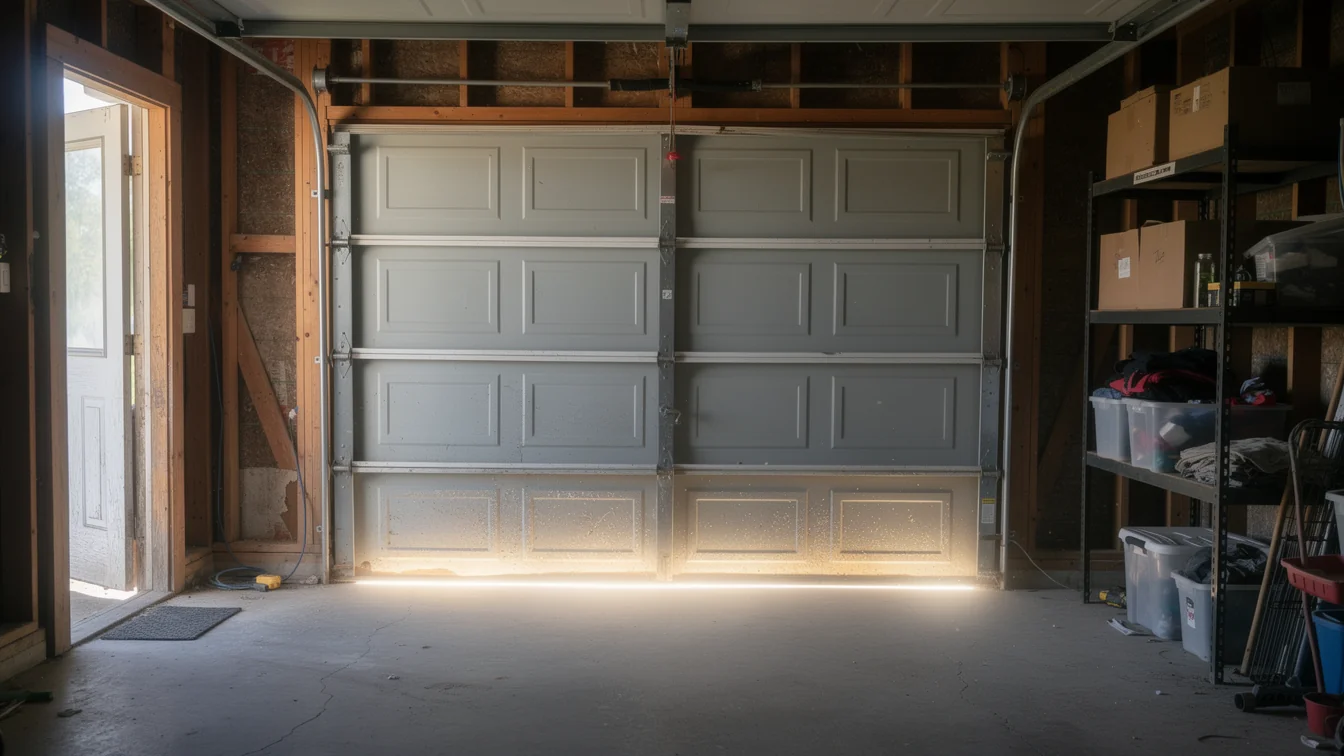
If your house falls into that 1960s-70s band that makes up most of the stock here, start by looking at the door's construction. Put your hand flat against the inside panel - if it's a single layer of steel with no backing and you can feel outside temperature through it, that's a door built before insulation rules applied, not a defect, just its age.
Next, check the bottom corners of the panels for rust bloom or pinholing, especially near the weatherstrip track. Pre-1980s doors in this area often used thinner gauge steel than what's sold now, and after fifty-plus years that shows up as surface corrosion before anything structural.
Last, watch the door move through a full cycle. A door built for the original torsion hardware from that era can look fine sitting still but bind or shudder partway through if the spring was ever swapped for a non-matching size - a common fix we see on doors from houses in this median 1972 range, where a spring replacement decades ago didn't account for the door's actual weight.
What Is Going On
Put it together and the picture is this: Concord's garage doors are, on average, older than the national housing stock, built in an era before insulation standards existed for this product, and sitting in a climate mild enough that the main driver of failure isn't weather, it's age and mismatched hardware accumulated over decades of small fixes. That's not true of every town - plenty of places have newer housing stock or harsher climates where the failure pattern looks completely different.
Where we draw a line: if a door from that 1938-2008 build window still has its original hardware and panels, sometimes the right call isn't another repair, it's replacement, because parts for some of those original configurations aren't something we can source quickly. We'll tell you when that's the case instead of patching it again.
Frequently asked questions
Why does the age of my house matter for my garage door?
Because in Concord, most houses were built between 1938 and 2008 with the median around 1972, and garage door insulation standards didn't exist yet for a lot of that stock. If your house falls in that range, your door was very likely built without a thermal break, which changes how it ages and how it should be serviced.
Does Concord's climate cause garage door problems?
Not in the way people assume. Concord sits in a mild temperate band, so we're not dealing with freeze-thaw cracking or storm damage driving failures. What we see instead is slow wear tied to door age and mismatched hardware, not weather extremes.
How do I know if my door has no insulation?
Put your hand flat against the inside of a panel on a warm day. If it's a single layer of steel and you can feel the outside temperature coming through, it was built before insulation requirements applied to garage doors - common across Concord's 1960s-70s housing stock.
Is it worth repairing a door from the 1970s instead of replacing it?
Sometimes, sometimes not. If the panels and original hardware are from that era, parts aren't always something we can get quickly, and a repair can end up costing close to what replacement would. We'll tell you honestly which way the math points for your specific door.
Related garage door services in Concord
More garage door guides
Book garage door service in Concord
Call now or request a quote - tell us what the door is doing and where you are.