
Concord, CA · Garage Door Service
Weather Seals and Drafts in Concord Garages
Concord's 1960s-70s housing stock and mild climate create specific seal wear patterns. Here's what local homeowners should check before drafts become water intrusion.
- Repairs & new doors
- Springs & openers
- Serving 6 nearby communities
What Local Conditions Do
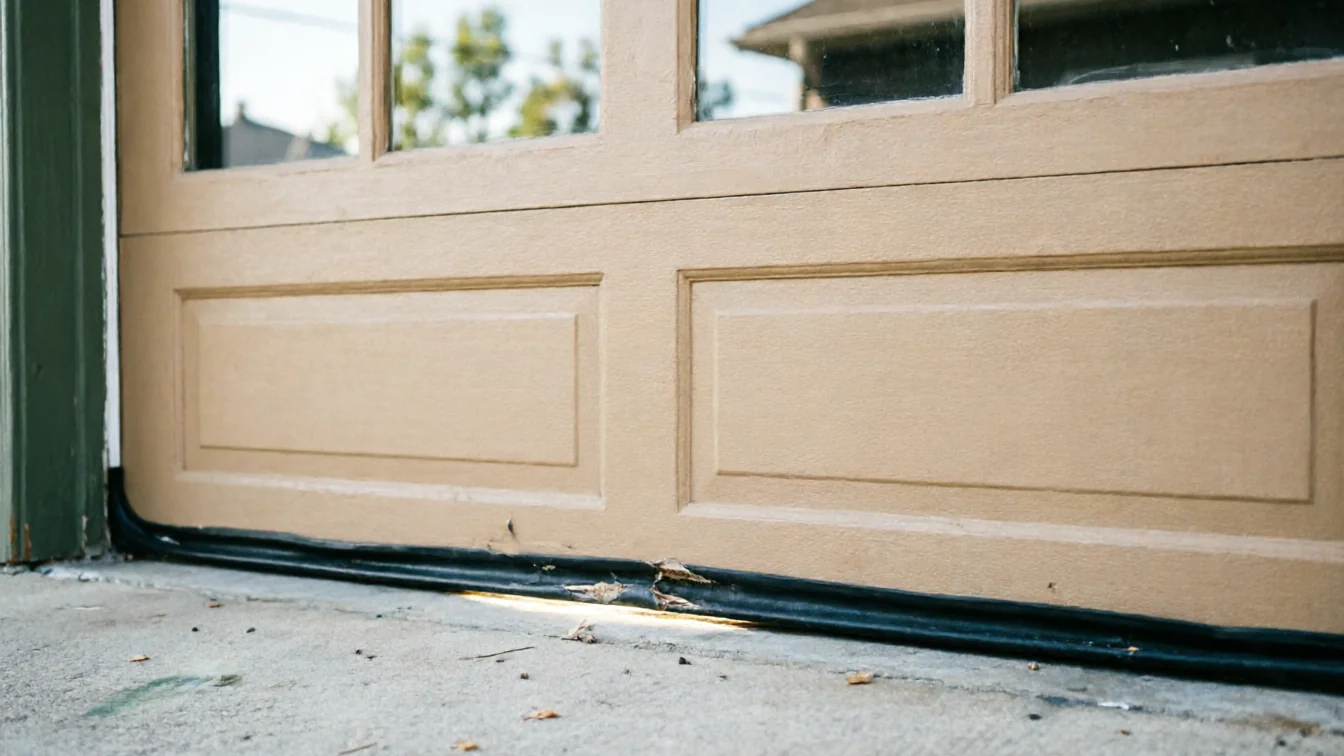
Most of Concord's housing went up between 1938 and 2008, with the bulk of it dating to the 1960s and 70s across the area's named neighborhoods. That means a lot of garages still running original or first-replacement bottom seals and jamb weatherstripping that was never built for a fifty-year service life. Concord sits in a mild temperate band, so you're not dealing with the freeze-thaw cracking that tears up rubber seals in colder states. The wear here is different: it's slow UV breakdown and the seal going stiff and flat rather than splitting outright. A stiff seal still looks intact from across the garage, which is exactly why it fools people. You run a hand along the bottom edge and it feels like cardboard instead of rubber, and that's the seal no longer flexing down into the slab to close the gap. On the older end of Concord's housing stock, the slab itself has often settled a little unevenly over six decades, so the seal has to do more compensating work than it did when the house was new. That combination of an aging seal and a slab that's no longer perfectly flat is the actual mechanism behind most draft complaints here, not just "the weatherstripping is old."
The Seasonal Bit
Because Concord doesn't get hard freezes, you won't see the dramatic seal failures that show up as ice-cracked rubber elsewhere. What you get instead is a slower draft that shows up as a draft along the floor and a line of dust or leaves collecting right where the door meets the slab. In a mild climate, that gap doesn't announce itself the way a frozen seal does - it just sits there letting outside air in year-round, and most owners don't notice until a heating or cooling bill creeps up or they feel cold air at ankle height in a room above or next to the garage. The mild band also means seals don't get the seasonal flex-and-recover cycle that keeps rubber somewhat supple in places with real winters. Here, a seal that's twenty years old has usually just baked slowly under the sun through consistent dry spells, especially on west or south-facing garage doors. That's a slower failure, but it's steady, and it tends to hit all at once across a neighborhood built in the same decade, since the seals were all installed around the same time with the same materials.
Checking It Yourself
Close the door and look at the bottom edge from outside in daylight. If you can see light coming through anywhere along the slab, or feel air moving with your hand held an inch off the floor, the seal isn't doing its job. Next, check the two vertical seals along the jambs where the door meets the frame - in older Concord houses these are often a different style from the bottom seal because they were replaced at a different time, and mismatched seals are common on houses from the 1960s and 70s that have had one or two partial repairs over the decades. Press the rubber with a thumbnail. If it doesn't spring back and leaves a dent, it's past useful life. One honest limitation here: a visual check won't tell you if water has already gotten past a failed seal and into the slab edge or framing, and that's a separate problem from the draft itself. If you see staining or a damp line along the base of the door frame, that's worth a closer look beyond just the seal.
What Is Going On
Put together, Concord's situation is pretty specific: a lot of the service area's 155,419 owner-occupied houses are sitting on original garage slabs poured decades ago, paired with mild-climate seals that fail by slow stiffening rather than sudden cracking. That's a quieter problem than what homeowners in harsher climates deal with, but it's not a nothing problem - a flattened seal lets in dust, pests, and eventually moisture, and it does it steadily rather than all at once. The fix is usually straightforward: a new bottom seal and matched jamb weatherstripping sized to the actual door, not a universal kit that ignores the slab's settling. We don't recommend tearing into the door itself if the only symptom is a draft - that's a seal job, not a structural one, and treating it as bigger than it is just costs more for the same result.
Frequently asked questions
Why does my garage door let in a draft even though the seal looks fine?
In Concord's mild climate, seals fail by going stiff and flat rather than cracking visibly. A seal can look intact from a few feet away while no longer flexing down to meet an uneven slab, which is common in houses from the 1960s and 70s where the floor has settled slightly over the decades.
How often do garage door seals need replacing in Concord?
There's no fixed schedule in the facts we'd point you to, but UV exposure in a mild, sunny climate wears rubber seals down steadily over years rather than seasons. Check them by hand periodically - if the rubber doesn't spring back after a thumbnail press, it's time to replace it.
Is a drafty garage door just a seal problem or something bigger?
Usually just the seal and weatherstripping, especially on older Concord homes with original slabs. It becomes a bigger problem only if water has gotten past the seal and into the frame or slab edge, which you'd see as staining or dampness rather than just a draft.
Related garage door services in Concord
More garage door guides
Book garage door service in Concord
Call now or request a quote - tell us what the door is doing and where you are.