
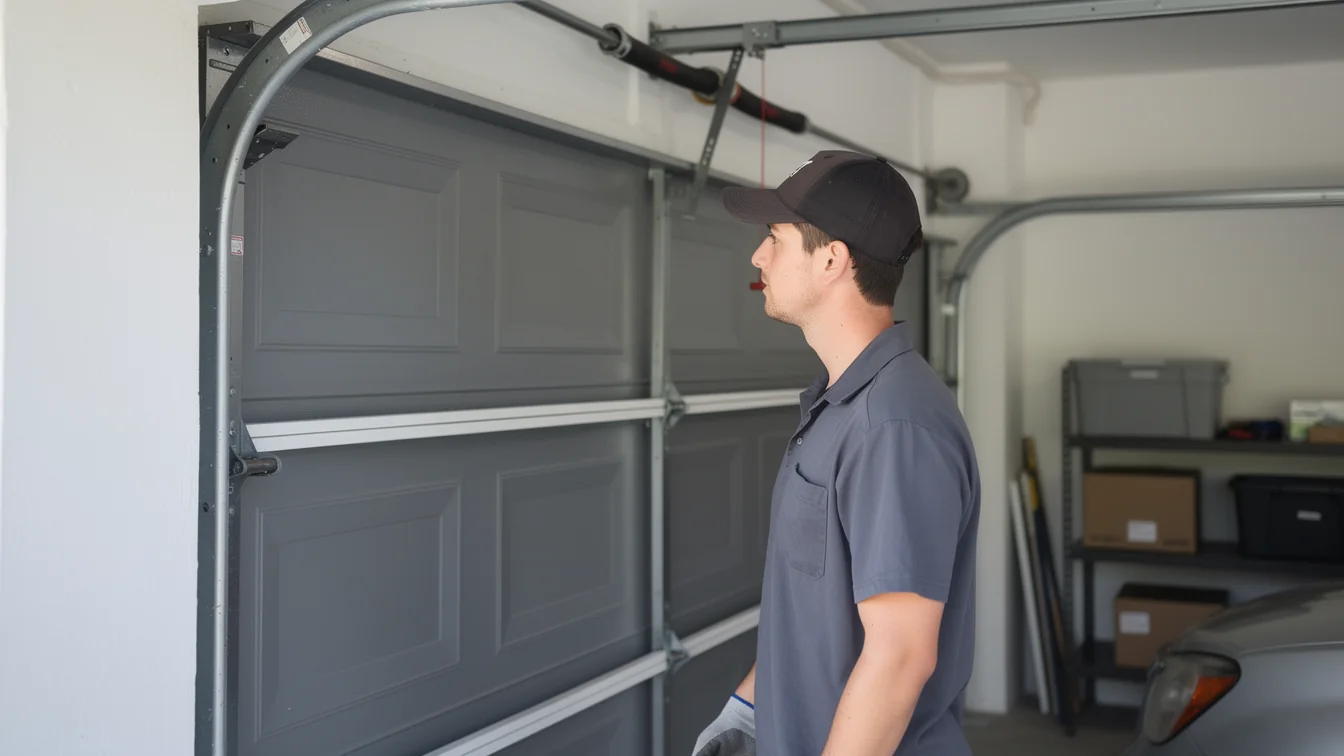
Concord, CA · Garage Door Service
What That Noise From Your Concord Garage Door Actually Means
Concord homes mostly date to the 1960s-70s building boom, so the squeaks and bangs you hear come from predictable, aging hardware, not from a design flaw. Here's how to tell them apart.
- Repairs & new doors
- Springs & openers
- Serving 6 nearby communities
What Local Conditions Do
Concord's housing stock runs from 1938 to 2008, but the median build year sits at 1972, and most of the 39 named areas in this part of the county went up in a tight run of 1960s and '70s construction. That matters for noise because it means a huge share of doors in town are running original or second-generation hardware: steel tracks that have flexed through five decades of temperature swings, torsion springs rated for a cycle count most of them have long since passed, and rollers that were nylon-and-steel hybrids before sealed bearings were standard. A door built in that era doesn't fail the same way a 2015 door fails. The noise profile is different - looser brackets, worn spring coils, hinges that have seen fifty years of pivot wear instead of ten. When you hear something off in a Concord garage, the first question isn't "what's wrong," it's "how old is this specific piece of hardware," because in this town the answer is very often "older than you think."
The Seasonal Bit
Concord sits in a mild temperate band, which is a mixed blessing for a garage door. You don't get the hard freeze-thaw cycling that cracks lubricant and seizes bearings in colder climates, so metal fatigue here tends to be slow and steady rather than sudden. But mild doesn't mean static - daily swings between a cool morning and a warm afternoon still make steel tracks and springs expand and contract, just gently, over and over, for years. That slow cycling is why older Concord doors develop a particular kind of noise: a faint groan on the first opening of the day that quiets down by evening, as parts settle back into their worn grooves. It's not a dramatic failure pattern. It's closer to a joint that aches before rain. If your door is quietest at 2pm and noisiest at 7am, that's the climate talking, not necessarily an emergency.
Checking It Yourself
Before you call anyone, stand in the garage with the door closed and run it through one full cycle, listening rather than watching. A rhythmic thunk at the same point in the travel, every time, usually means a bent track section or a roller that's flat-spotted - common on doors from the 1960s-70s runs that make up most of Concord's housing. A sharp metallic pop, once, followed by the door refusing to open evenly, is very often a torsion spring giving out; don't force it, and don't put your hands near the spring. A steady squeal that rises in pitch as the door moves is almost always a dry hinge or roller and is the one noise on this list you can often fix yourself with the right garage door lubricant, not household oil. Grinding that sounds like it's coming from the opener unit itself, rather than the door, points to the gear inside the motor housing - not something to open up on a Saturday afternoon. Write down where in the cycle the noise happens; that detail saves time on the phone.
What Is Going On
Here's the honest limitation: noise alone doesn't always tell you whether a job is a twenty-minute fix or a full spring and track replacement, and anyone who promises a firm diagnosis over the phone without seeing the door is guessing. What we can say, based on what's actually out there in Concord, is that the age distribution of the housing stock means a lot of these calls turn out to be the same handful of causes - worn rollers, fatigued torsion springs, tracks that have drifted out of alignment over decades of settling. None of that is unusual for a town built mostly between the 1960s and 2000s. What matters is catching the noise before the part fails completely, since a spring that lets go under load can bend a track or drop a panel, and that turns a simple repair into a bigger one.
Frequently asked questions
My garage door only makes noise in the morning - is that serious?
In a mild climate like Concord's, a door that's noisy on the first cycle of the day and quiet by afternoon is usually reacting to the daily temperature swing on aging hardware, not failing outright. Worth monitoring, not necessarily an emergency, especially on older tracks and springs typical of this area's 1960s-70s housing.
Is it normal for an older Concord garage door to sound different than a new one?
Yes. With median construction here around 1972, a lot of doors are running original or early-replacement hardware - steel tracks and springs that have cycled for decades. That hardware develops a groan or squeal pattern that a newer door, with sealed bearings and fresher coils, simply doesn't produce yet.
Can I lubricate the noise away myself?
Sometimes. A dry hinge or roller squeal often responds to a proper garage door lubricant applied to the moving joints. A sharp pop followed by uneven movement is a different problem - likely a spring - and that's not a DIY lubrication fix. Stop and get it looked at rather than forcing the door through more cycles.
Related garage door services in Concord
More garage door guides
Book garage door service in Concord
Call now or request a quote - tell us what the door is doing and where you are.