
Concord, CA · Garage Door Service
Emergency Garage Door Repair Across the Concord Area
Broken spring or jammed door in Concord? We work on the 1960s-70s housing stock common across this part of Contra Costa County, day or night.
- Repairs & new doors
- Springs & openers
- Serving 6 nearby communities
Time on the Job
A stuck or broken garage door doesn't wait for a convenient hour, and in this part of Contra Costa County that's usually a spring or cable problem on a house built somewhere between 1938 and 2008, with most of the stock going up in the 1960s and 70s. That matters because a door installed in 1968 and never touched since has hardware nobody stocks on a shelf anymore - different spring wind, different drum size, sometimes a different track gauge than what ships today. We carry a range of torsion and extension springs, rollers, and cable stock sized for that era of door because that's what we run into most across the 39 named areas we cover out from Concord. When a call comes in with a door stuck halfway up or a spring that's let go with a bang, the first question is always the age of the house, not the brand of the opener. That one detail tells us what's probably failed before we even load the truck.
Why It Happens Here
The mild temperate climate across this service area is actually kind to garage doors in one sense - no deep freeze to crack a panel, no ice to jam a track. But mild and dry year-round means less reason for a homeowner to ever open the door and check the springs, so wear goes unnoticed until the cable frays through or a torsion spring finally snaps under tension it's held for decades. Combine that with a housing stock where the median build year is 1972: a lot of these doors are on their second or third opener but still running the original spring and track hardware from the 1960s-70s construction wave. Steel fatigues the same whether it rains or not, and in a dry climate there's no rust warning sign to tip you off early. We see torsion springs fail clean, with no rust at all, simply because fifty years of daily cycles caught up with the coil. That's the pattern across this whole area, not just one street or one subdivision.
What You Are Seeing
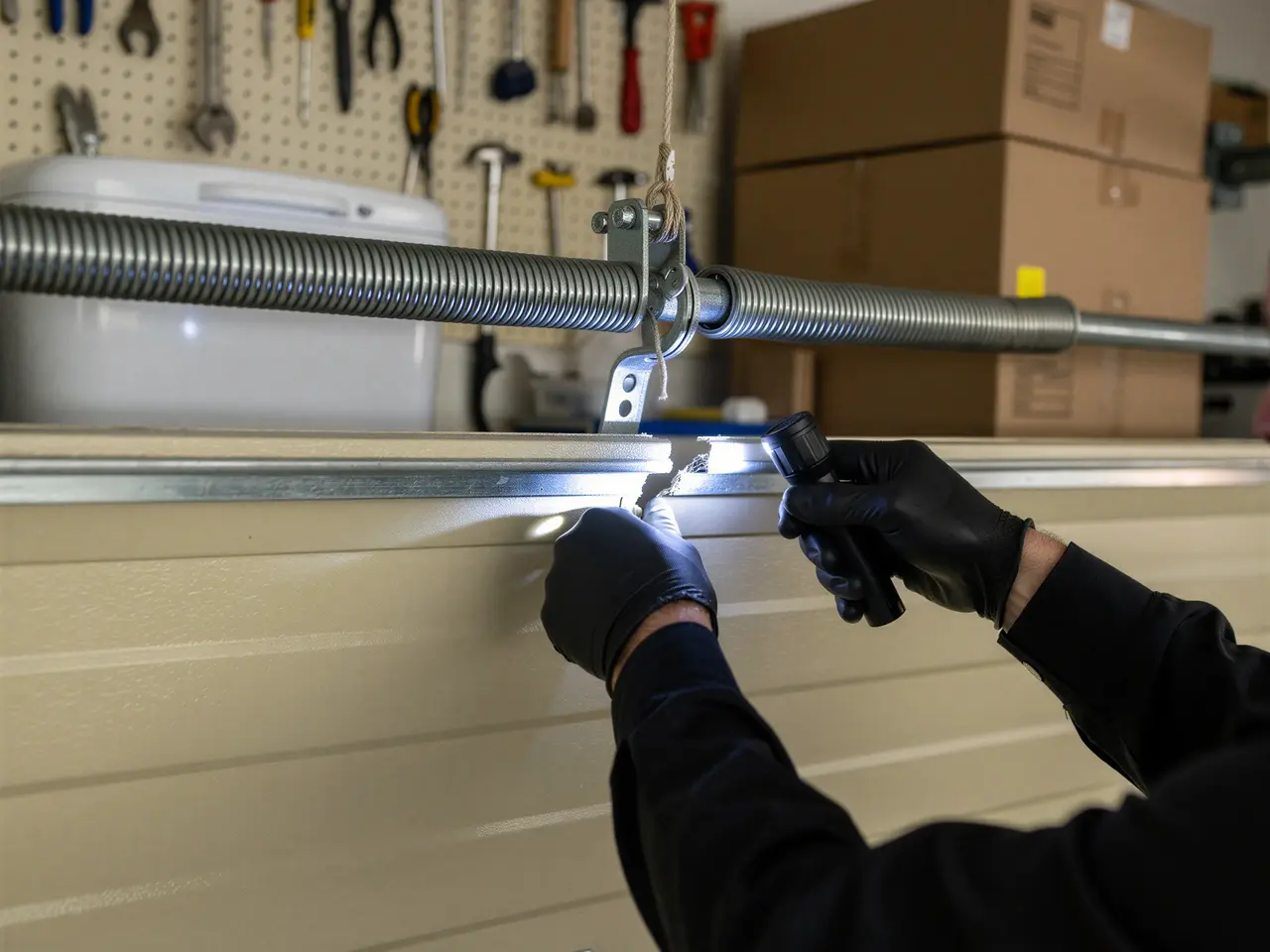
If the door won't budge and you hear a loud bang before it happened, that's almost always a torsion spring letting go - the door now weighs what it actually weighs, which is more than any opener motor is built to lift alone. If the door is crawling up unevenly, one side higher than the other, check the cables; a frayed or snapped cable on one side will do that. A door that reverses right after it touches the floor is usually a sensor or limit issue, not a spring problem, and that's a smaller job. Grinding or binding partway up a track that's decades old often means the track itself has bent or pulled away from the frame, which is common on the older one-piece and sectional doors still in service on houses from that 1960s-70s wave. None of these are cosmetic. A door under spring tension that's failing is a heavy, fast-moving object, and guessing at which part is wrong before you touch anything is how people get hurt.
Can You Do This Yourself
Reattaching a cable, swapping a roller, or adjusting a limit switch are reasonable DIY jobs if you're comfortable with a ladder and a wrench. Touching a torsion spring is not. These springs are wound under enough tension to break bones or worse, and they do not behave like a bolt you can just loosen. If your door has the bang-and-stop symptom described above, that's a call, not a project. We'll also tell you straight when a door isn't worth repairing - if the track is badly bent, the panels are rusted through, or the opener and springs are failing at the same time on a door that old, replacement usually costs less over the next few years than chasing repairs on parts nobody makes anymore. That's an honest call we make on site, not over the phone.
Frequently asked questions
Why did my garage door spring break with no warning?
Most houses in this area were built in the 1960s-70s and still run original torsion or extension springs. Steel fatigues with use regardless of weather, and our mild climate gives no rust or ice warning before it happens. The spring simply reaches its cycle limit and lets go, often loudly.
Is it safe to open the door manually after a spring breaks?
You can usually lift it by hand briefly to get a car out, but the door will feel much heavier than normal since the spring was carrying that weight. Don't leave it open on its own and don't let kids or pets near it until a tech has replaced the spring and reset the tension.
Do you work on older doors with original 1960s and 70s hardware?
Yes, that's most of what we see. Torsion drums, cable sizes, and track gauges from that era differ from what's sold today, so we carry stock sized for houses built across that period rather than only current parts.
Book garage door service in Concord
Call now or request a quote - tell us what the door is doing and where you are.