
Concord, CA · Garage Door Service
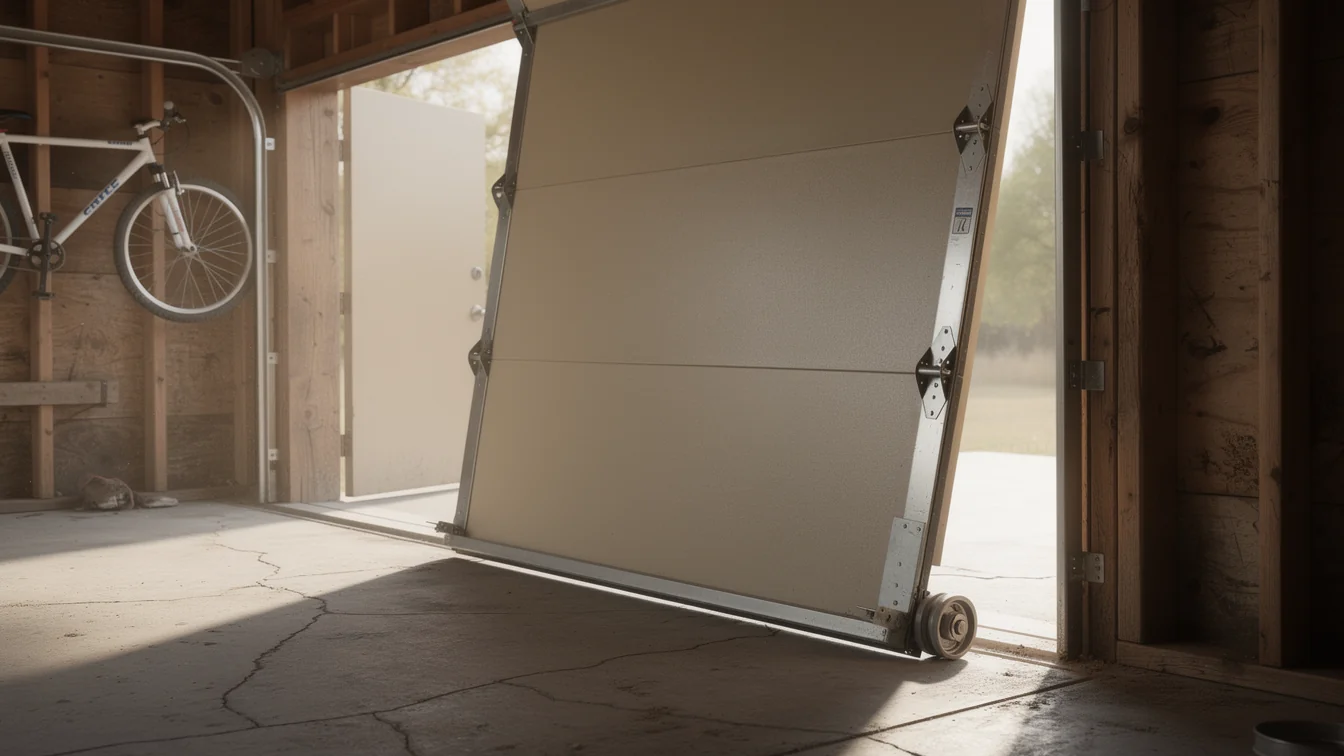
Why a Door Goes Off Track in a Concord House
Concord's 1960s-70s housing stock and mild climate both play a role in doors jumping track. Here's what actually causes it and what to check first.
- Repairs & new doors
- Springs & openers
- Serving 6 nearby communities
What Local Conditions Do
Most of the doors we get called out for in Concord sit on houses built between 1938 and 2008, with the bulk of that stock going up in the 1960s and 70s across the named areas on this side of town. That matters because track alignment depends on the original framing holding true over fifty-plus years, and a lot of these garages were framed fast during that building boom. Settling in the slab, a warped jamb, or a stud that's shifted a quarter inch is enough to pull a track bracket out of line. Newer builds in the service area, the ones from the 1990s and 2000s, tend to have straighter framing and fewer of these issues, but they're the minority here, not the norm. If your house falls in that mid-century band, the track brackets are worth checking before you blame the door itself. A door can be perfectly balanced and still ride rough if the vertical track it's riding in has crept out of plumb with the frame around it.
The Seasonal Bit
Concord sits in a mild temperate band, not the kind of climate that puts a door through hard freeze-thaw cycles or violent humidity swings. That's good news in one sense - you're not fighting ice-swollen tracks or wood that expands and contracts hard enough to rack a frame every winter. But it also means a lot of homeowners here never think about seasonal movement at all, so when a door does start walking off its rollers, people assume something broke suddenly rather than loosened slowly. In this climate the more common driver is just accumulated wear - track brackets that back out a sixteenth of a turn at a time, rollers that have worn down enough to rattle in a track that was never quite true. There isn't a sharp seasonal spike in off-track calls here the way there is in places with real winters. It's steadier and slower, which means it's also easier to catch early if you're actually looking.
Checking It Yourself
Open the door partway and look at the gap between each roller and its track. On a lot of the 1960s and 70s houses in this area, the original track brackets were lagged into framing that's shifted a little since, so you'll often see one side pulled slightly tighter than the other. Run your hand along the vertical track on both sides - any spot where it bows outward or in, even slightly, is a candidate for where a roller eventually jumps. Check the horizontal track-to-vertical-track joint too; that bolted connection loosens over decades and is an easy thing to miss. If the door is noticeably harder to lift by hand on one side than the other, that's often a spring balance issue masquerading as a track problem, and the two get confused a lot. We don't recommend forcing a door back onto its track yourself if it's already jumped - that's where fingers get caught and cable tension can let go unexpectedly.
What Is Going On
Put plainly: track brackets loosen, framing moves a little over fifty or sixty years, and rollers wear down faster than most owners expect. None of that is dramatic, which is exactly why it gets ignored until the door finally jumps the track on a Saturday morning. Given how much of the housing here dates to that 1960s-70s build-out, we see the same pattern more often than not - original hardware, original bracket spacing, decades of small shifts nobody noticed. A door that's gone fully off track usually needs a hands-on look rather than a guess over the phone, since the fix depends on whether the track itself bent in the process or just popped loose. We'll say plainly that not every off-track door needs a new track - sometimes it's a bent section that straightens, sometimes the whole run needs replacing, and we won't know which until we're standing in front of it.
Frequently asked questions
Is an off-track door always an emergency?
Not always, but don't run the opener. If the door jumped while closing and is hanging unevenly, leave it alone and call rather than forcing it - cables under tension can shift further and the door itself can fall. If it's off track but resting flat on the floor, it's less urgent, though still not something to drive a car past.
Why does this happen more on older Concord houses?
A lot of the housing stock here dates to the 1960s and 70s, and track brackets lagged into framing from that era have had decades to work loose or shift slightly as the house settles. It's less about the door and more about the mounting it's been riding on this whole time.
Can I just push the door back onto the track myself?
We'd rather you didn't. Once a roller jumps the track, the cables and springs are often under uneven tension, and pushing on the panel can let that tension release suddenly. It's a quick fix for us with the right tools, but it's not a safe DIY job.
Related garage door services in Concord
More garage door guides
Book garage door service in Concord
Call now or request a quote - tell us what the door is doing and where you are.