Concord, CA · Garage Door Service
What Happens to a Garage Door Spring on a Cold Concord Morning
Concord's mild temperate climate still drops overnight temps enough to snap old torsion springs on 1960s-70s doors. Here's what to check before you call.
- Repairs & new doors
- Springs & openers
- Serving 6 nearby communities
What Local Conditions Do
Concord sits in a mild temperate band, not the kind of place that sees ice storms or weeks of hard freeze. But mild doesn't mean flat. The swing between a warm afternoon and a cold, damp night here is enough to stress metal that's already fatigued, and a lot of the metal on local doors is old. Housing in this area was built mostly between 1938 and 2008, with the median year sitting at 1972, and most of what you see across the 39 named neighborhoods and nearby areas is 1960s-70s stock. A torsion spring installed when a house went up in 1968 has had five decades of expansion and contraction to work through. Cold snaps don't create the weakness - they just pick the night it finally lets go. If your door is original to a house from that era, the spring has outlived its rated cycle count a long time ago, and a cold overnight low is often just the final straw, not the cause.
The Seasonal Bit
Because Concord's climate is mild rather than harsh, people here don't expect garage door trouble to be seasonal at all - that's a mistake. Steel contracts as it cools, and a torsion spring under tension that's already got a hairline fracture from 40-plus years of cycling can fail on the first genuinely cold clear night of the year, not during the coldest week. Mild climates lull people into skipping fall checks because nothing here looks like winter. The metal doesn't know that. If your door has gotten noticeably harder to lift, or the opener strains more than it used to, right as the nights start getting cold, that's the pattern worth paying attention to before the spring actually snaps - usually with a bang loud enough to bring you out of bed.
Checking It Yourself
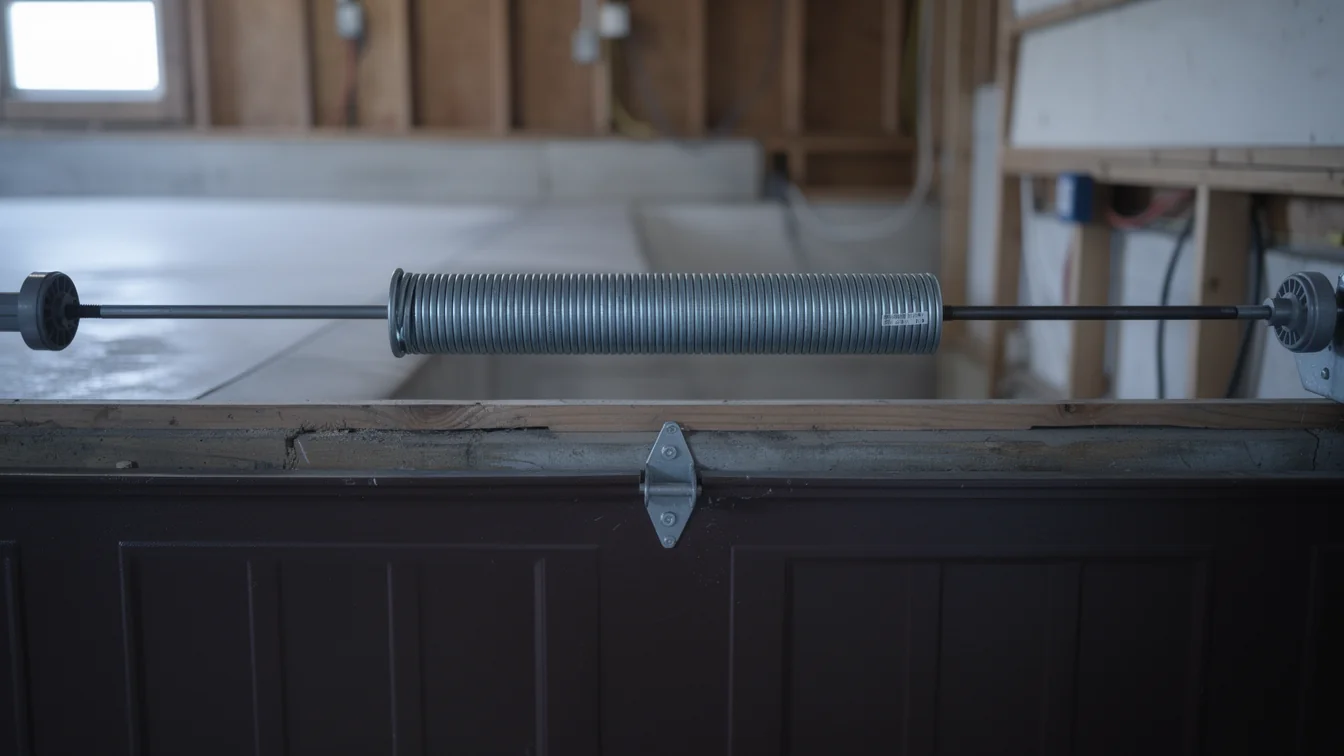
Unplug the opener first. Lift the door by hand, slowly, about halfway. A spring that's doing its job holds the door roughly where you let go. A spring that's failing or already gone lets the door fall or feels dramatically heavier than it did last year - that's the clue, not a loud noise, since plenty of springs go quietly. Look at the spring itself along the top of the frame: a gap in the coil, visibly uneven winding, or rust pitting on hardware that's original to a 1960s or 70s build are all signs of age catching up. Don't try to wind or unwind a torsion spring yourself - it's under enough tension to cause real injury, and that's true regardless of how mild the morning feels.
What Is Going On
Most of what we get called out for after a cold night isn't storm damage, because Concord doesn't really get storm damage in the way some climates do - it's decades-old torsion springs reaching the end of their cycle life right as a temperature drop adds one more stress point. We can tell you honestly that a 50-year-old spring on original hardware is not worth re-tensioning; it's worth replacing, and we don't stock every obsolete size from that era on the truck, so some jobs mean a short wait on a part. If your garage is attached to one of the many homes here built in that 1960s-70s window, that's the single most useful thing to know before anything breaks: the age of the spring, not the weather, is doing most of the work.
Frequently asked questions
Does Concord's weather really cause spring failures?
Not directly - F3 shows this is a mild temperate climate, not a harsh one. But overnight temperature drops still add stress to metal that's already fatigued from decades of cycling, and a lot of local garage doors sit on hardware original to houses built in the 1960s and 70s. The cold is the trigger, age is the cause.
My house is older, built around 1970 - should I worry more?
Worth a look, yes. Median housing age across the area is 1972, and most stock is from the 1960s-70s, which means a lot of original torsion springs are well past any reasonable service life. A visual check of the coil for gaps or rust is a quick first step before anything fails.
Can I just rewind the spring myself to save a call?
No. A torsion spring under tension can cause serious injury if it slips while you're working on it, and that risk doesn't change with how mild the weather is. Lifting the door by hand to test balance is safe; adjusting the spring winding is not a DIY job.
Related garage door services in Concord
More garage door guides
Book garage door service in Concord
Call now or request a quote - tell us what the door is doing and where you are.