
Concord, CA · Garage Door Service
Panel Replacement for Clayton Garage Doors
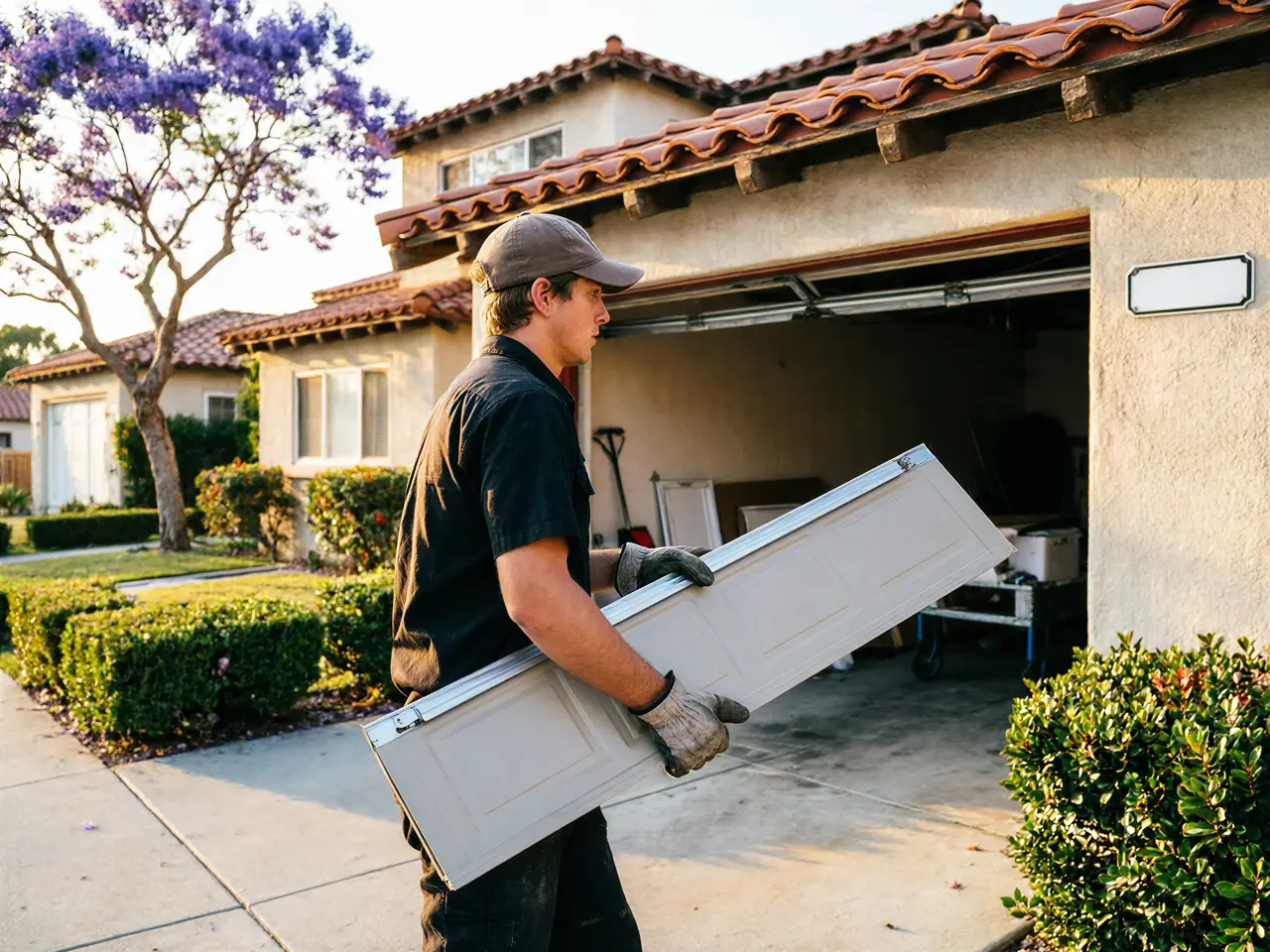
Panel replacement for Clayton's 1980s-era garage doors, serviced from four miles away in Concord. Matching panels on a 40-year-old door takes more than a part number.
- Repairs & new doors
- Springs & openers
- Serving 6 nearby communities
The Complications
Clayton sits four miles from our shop in Concord, close enough that the drive itself is never the issue. What matters more is what's waiting at the house. The median home here was built around 1984, which puts most garage doors in a different generation than what we see across the rest of the service area, where the typical build year runs closer to 1972. That gap matters for panel work. A door from the early-to-mid 80s is almost always steel sectional on standard torsion hardware, not the older wood or side-mounted setups you'll find in the pre-1970s pockets nearby. The complication isn't the hardware, though - it's the panel itself. Forty years on, the original color run and ribbing profile from that era is frequently discontinued, even when the door brand itself is still around. We can usually find a compatible panel, but 'compatible' and 'identical' aren't the same word, and a mismatched panel on an otherwise good door is the kind of thing a homeowner notices every time they pull in. Climate isn't a big factor here - this is a mild temperate area, so panels fail from dents and impact, not weather fatigue.
Time on the Job
A straight panel swap on a door this age, where we've got a matching or close-matching panel in hand, is a contained job - pull the damaged section, transfer the hardware, reseal the seams. Where it stretches out is the matching step before we ever touch a tool. If the original panel profile isn't available, we're either sourcing a compatible one and color-matching on site, or having the honest conversation about whether a full door replacement makes more sense than chasing a panel that won't quite match. That conversation happens more often on 1980s doors than you'd think, simply because the run of panels from that era has thinned out over forty years. We'd rather tell you that up front than sell you a patch job you'll be unhappy looking at.
Getting It Booked In
Since every job here travels from Concord, four miles out, the thing that actually saves time is nailing down the panel details before the truck leaves. A photo of the damaged panel, the brand if it's visible on the track or opener, and roughly how old the door is gets us most of the way to knowing whether we're doing a clean swap or walking in with a few options. Clayton's smaller household count - under four thousand - means we're not running multiple stops in the area on a given day, so there's no batching convenience working in your favor; it's one job, one visit, planned around what we bring with us. That's exactly why the pre-visit details matter more here than they would somewhere we're already driving past.
Can You Do This Yourself
A single dented panel on a sectional door is within reach for someone comfortable with a ladder and a socket set, provided the panel is still in production and the door isn't under spring tension at the section you're working on. Where it stops being a weekend job is anything involving the bottom panel near the cables, or a panel on a door where the available replacement doesn't match the existing ribbing or insulation core - at that point you're not swapping a part, you're troubleshooting a mismatch, and that's a harder problem to walk back from once it's installed. Given the age of doors common to this area, checking panel availability before buying anything is worth the ten minutes it takes.
What You Are Seeing
Dents from a car bumper or a stray basketball are the obvious case - a visible crease that doesn't affect the door's operation yet but will eventually stress the seam. Less obvious is a panel that's started to bow or separate slightly from its neighbor, which on a door built around the early-to-mid 1980s is often the insulation core breaking down inside the steel skin, not just cosmetic damage. If the door grinds, catches, or jumps a tooth on one side as it travels, that's usually the panel pulling slightly out of its track alignment at the damaged section - not the opener, and not the springs. Worth noting: cosmetic cracking in sun-faced paint isn't a panel failure on its own in this climate; we don't push a repair where none is needed.
Frequently asked questions
Will a new panel match the rest of my door in Clayton?
It depends on the door's age and brand. Many Clayton homes have doors from the early-to-mid 1980s, and the original panel profile or color from that era is often discontinued. We'll check availability before the visit and tell you honestly whether it's a clean match or a case where full door replacement makes more sense.
How far out is Clayton from your Concord crew?
About four miles. That's a short drive, but we still plan the job around the panel details you send ahead of time, since we're not already stocking a specific Clayton job on the truck that day.
Can I just replace one panel instead of the whole door?
Often yes, if the panel is still available and the damage is isolated to one section away from the cables. If the profile's discontinued or the damage is near the bottom section, we'll walk you through why a full door might be the better call.
Is panel damage here usually weather-related?
Not really. This is a mild temperate area, so panels in Clayton typically fail from impact - a bumper, a ball, a ladder - rather than sun or moisture fatigue. Cosmetic fading on its own isn't a sign the panel needs replacing.
Book garage door service in Concord
Call now or request a quote - tell us what the door is doing and where you are.