Concord, CA · Garage Door Service
Is Your Concord Garage Door Worth Fixing, or Time to Replace It
Concord homes mostly date to the 1960s-70s, with stock running 1938-2008. Here's how to tell if your original door and hardware are worth repairing.
- Repairs & new doors
- Springs & openers
- Serving 6 nearby communities
What Local Conditions Do
Concord's housing stock runs from 1938 to 2008, but the median build year sits at 1972, and most of the 39 named areas we work in are filled with houses from that same 1960s-70s wave. That matters for garage doors because a door installed when the house was built, or a replacement from the 1980s, is running hardware that nobody designs for anymore: single-torsion springs sized for lighter steel doors, galvanized track with narrower tolerances, and openers with chain drives that predate modern safety reversal standards. If your house falls in that median band, there's a decent chance the door or opener predates any upgrade at all. That doesn't mean it needs to go. A lot of these doors were built heavier than what gets sold today, and the track and jamb hardware on a well-kept 1970s install can outlast two cheap replacement doors. The question isn't age by itself, it's whether the panel, springs, and track are still square and whether parts for that specific setup are still stockable. Some are. Some aren't, and we'll tell you straight when they aren't.
The Seasonal Bit
Concord sits in a mild temperate band, which is a break compared to places with hard freeze-thaw cycles or heavy humidity swings. That means your springs and tracks aren't fighting the kind of seasonal expansion and contraction that cracks panels or seizes bearings in colder climates. It's part of why a 1970s-era door here can still be structurally sound decades on, when the same door in a harsher climate would have failed years ago. But mild doesn't mean zero wear. Temperature swings between a hot garage interior and cooler mornings still work on lubricant and on any wood trim pieces original to older doors. If your door is original to a 1960s or 70s build, the slow cycle of warm days and cool nights has had fifty-plus years to work on the hardware, just more gently than it would elsewhere. That's the honest version of the seasonal story here: the climate buys your door more years, it doesn't buy it forever.
Checking It Yourself
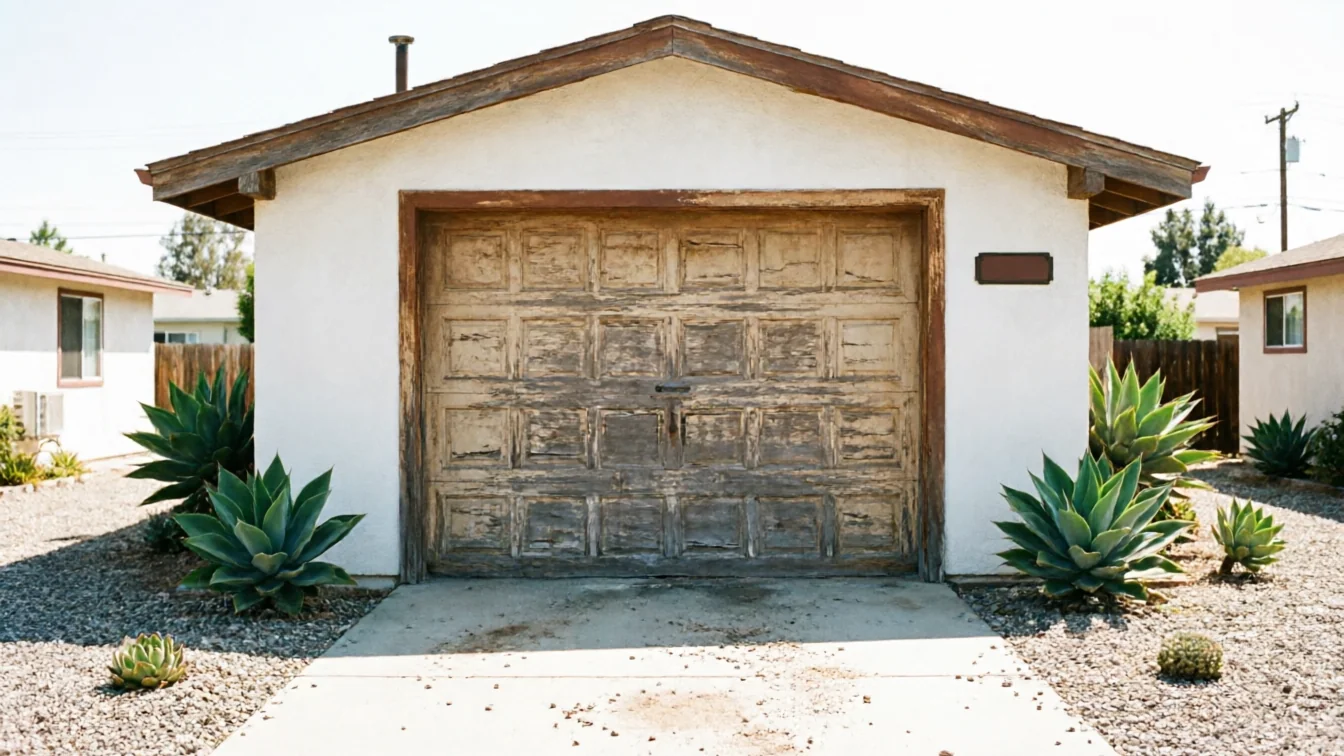
Before you call anyone, here's what to look at on an older Concord door. Pull the release cord and lift the door by hand, slowly, about halfway. It should stay roughly where you leave it. If it drops, the spring has lost tension and that's a repair job, not a reason to junk the whole door. Next, look at the track where it bolts to the frame. On houses from the 1960s-70s stock that makes up most of this area, the original wood jambs can shift slightly over decades, and a track bolted into a jamb that's moved will show daylight gaps or a visible lean. That's fixable by re-anchoring, usually, not a sign the door itself is bad. Check the panels for rust-through versus surface rust; surface rust on a mild-climate door is cosmetic. Rust-through at the bottom panel seam, especially on original steel doors from that era, is a different conversation. If the door is heavy, moves straight, and the springs are just tired, it's almost always worth fixing.
What Is Going On
Here's the honest limitation: we can't always get parts for the oldest hardware. A door original to a house built right at the front edge of our 1938-2008 range, meaning something installed before the 1972 median, sometimes uses spring winding cones, track brackets, or panel hinge spacing that current manufacturers don't make anymore. When that happens, we tell you plainly rather than trying to force a mismatched part onto an old frame. For anything from the 1960s-70s core of the housing stock, which is most of what we see, standard torsion springs, roller replacement, and track realignment cover the large majority of calls. Full replacement makes sense when the panel steel itself is rusted through, when the door is already off-track repeatedly, or when the opener motor has failed on a door old enough that a new opener won't mount cleanly to the existing track. Outside of those specific cases, a door from this area's housing stock is usually a repair, not a replacement.
Frequently asked questions
My house in Concord was built in the 1960s, is the original garage door too old to fix?
Not automatically. A lot of houses in this area's 1960s-70s housing stock still have original doors with sound steel panels. Age alone isn't the deciding factor, it's whether the springs hold tension, the track is still square, and the panel metal hasn't rusted through at the seams.
Does Concord's climate wear out garage door springs faster?
No. The mild temperate band here is easier on hardware than climates with hard freeze-thaw cycles, which is part of why original doors from the 1972 median build year are still common and often still functional, just with normal spring fatigue from decades of use rather than climate damage.
Can you always get parts for an older door?
Not always. Hardware on houses built at the early edge of the 1938-2008 range sometimes used spring cones or track brackets that current manufacturers don't produce. We'll tell you directly if your door falls into that category instead of forcing a part that won't fit right.
Related garage door services in Concord
More garage door guides
Book garage door service in Concord
Call now or request a quote - tell us what the door is doing and where you are.